Crimson Desert Defense Stat Explained: Why More Defense Helps, But Not Forever
Defense is one of Crimson Desert’s most important survivability stats, but stacking it blindly is a mistake. This guide breaks down how Defense appears to reduce incoming damage, why it may have diminishing returns, and when players should start prioritizing Damage Reduction, Health, and resistances instead.
Crimson Desert is not the kind of action RPG where you can simply stack the biggest number and expect to survive everything. The game’s combat is fast, physical, and punishing. A single bad dodge, mistimed block, or greedy combo can turn a good fight into a reload screen.
That is why the Defense stat matters.
But Defense is also easy to misunderstand. At first glance, it looks simple: more Defense means you take less damage. That is true, but only up to a point. Based on current player testing and community theorycrafting, Defense appears to follow a diminishing returns pattern, meaning each additional point of Defense helps less than the point before it.
In plain English: going from 20 Defense to 40 Defense feels huge. Going from 120 Defense to 140 Defense may barely feel noticeable.
 Armor matters in Crimson Desert, but the real question is how much survivability each Defense point actually gives you.
What Does Defense Do in Crimson Desert?
Defense reduces the amount of damage your character takes from incoming attacks. The higher your Defense, the more punishment you can absorb before needing to heal, retreat, block, or play perfectly.
That makes Defense especially valuable for:
- New players learning enemy attack patterns
- Boss fights with fast multi-hit combos
- Exploration in higher-level regions
- Builds that rely on close-range melee combat
- Players who prefer survivability over glass-cannon damage
Defense is not useless. It is one of the most important early-game stats because it gives you more room to make mistakes. In a game where timing matters, that extra margin can be the difference between surviving a combo and getting deleted.
The Important Part: Defense Has Diminishing Returns
The most common working model being discussed by players is:
Estimated Damage Mitigation = Defense / (Defense + 100)
This formula is not confirmed as the official internal game formula, but it is useful because it explains what players are seeing in practice: Defense helps a lot early, then starts to flatten out.
Here is what that model looks like:
| Defense | Estimated Damage Mitigation | Estimated Damage Taken |
|---|---|---|
| 25 | 20.0% | 80.0% |
| 50 | 33.3% | 66.7% |
| 100 | 50.0% | 50.0% |
| 150 | 60.0% | 40.0% |
| 200 | 66.7% | 33.3% |
| 300 | 75.0% | 25.0% |
The key lesson is not the exact percentage. The key lesson is the curve.
Going from 25 to 50 Defense gives a large improvement. Going from 200 to 300 Defense still helps, but the improvement is much smaller relative to the amount of stat investment required.
That is the core of diminishing returns.
Why Diminishing Returns Matter
Diminishing returns change how you should think about gear.
Early in the game, stacking Defense is usually a good idea. You are under-geared, enemies hit hard, and you probably do not know every enemy move yet. More Defense gives you breathing room.
Later in the game, however, pure Defense stacking becomes less efficient. Once you already have a strong Defense base, adding more flat Defense may not protect you as much as adding other survivability tools.
That is where stats like Damage Reduction, Health, resistances, and defensive Abyss Gear effects become more important.
A good survivability build should not ask only:
“How do I get the highest Defense number?”
It should ask:
“What combination of Defense, Damage Reduction, health, resistance, blocking, and mobility lets me survive the fights I am actually struggling with?”
That second question is the better one.
Defense vs. Damage Reduction
Defense and Damage Reduction are easy to confuse because both make you harder to kill. The difference is how they appear to scale.
Defense appears to behave more like a stat curve. It gives strong early gains, then weaker gains as your total gets higher.
Damage Reduction appears to behave more like percentage-based mitigation. That means it may become more valuable after you already have a solid Defense base.
A practical way to think about it:
| Game Stage | Better Priority |
|---|---|
| Early game | Defense |
| Mid game | Defense + Health |
| Late game | Damage Reduction + Health + enough Defense |
| Boss walls | Test Defense vs. Damage Reduction directly |
This does not mean you should ignore Defense later. It means that after a certain point, chasing more Defense may be less useful than adding Damage Reduction or other defensive effects.
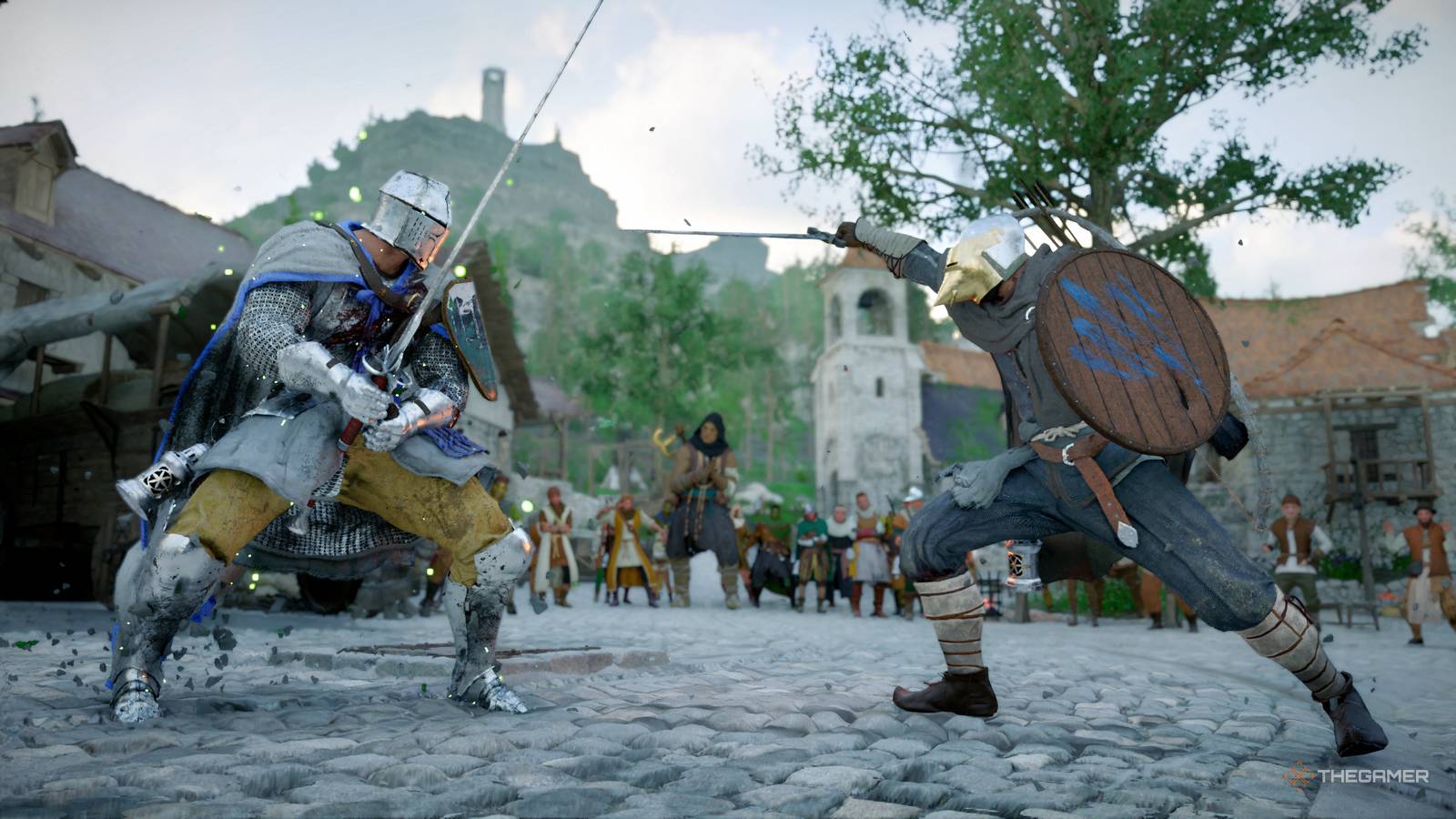 In harder fights, survival is not just about raw Defense. Blocking, dodging, Damage Reduction, and resistances all matter.
Example: Why 100 Defense Feels So Much Better Than 50
Using the working mitigation model:
50 Defense = 50 / (50 + 100) = 33.3% mitigation
100 Defense = 100 / (100 + 100) = 50.0% mitigation
That jump is big. You go from taking about two-thirds of incoming damage to taking about half.
That is why early Defense upgrades feel powerful.
Now compare this:
200 Defense = 200 / (200 + 100) = 66.7% mitigation
250 Defense = 250 / (250 + 100) = 71.4% mitigation
That is still an improvement, but it is much smaller. You added 50 more Defense and gained less than five percentage points of estimated mitigation.
That is why late-game Defense stacking can start to feel disappointing.
The Best Way to Build Around Defense
For most players, the smartest approach is a layered defense strategy.
1. Get Enough Defense First
Do not skip Defense early. If regular enemies are chunking your health bar, you probably need more armor upgrades, better defensive gear, or both.
Your first goal should be simple:
Get enough Defense that normal mistakes do not instantly kill you.
That does not mean face-tanking every boss. It means giving yourself enough survivability to learn the fight.
2. Add Damage Reduction Once Defense Feels Stable
After your Defense is already strong, start looking at Damage Reduction effects.
Damage Reduction is especially useful against:
- Bosses with large burst attacks
- Enemies with multi-hit combos
- Late-game encounters
- Fights where your Defense number is already high but you still feel fragile
This is where a lot of players make a mistake. They keep stacking more Defense because the number goes up, but the actual survivability gain may be small.
3. Do Not Ignore Health
Health is boring, but boring stats often win fights.
More health increases your ability to survive mistakes. It also gives healing items more room to work. If your Defense is decent but you are still getting one-shot or two-shot, more health may help more than another small Defense increase.
4. Match Resistance to the Fight
If an enemy is using elemental attacks, status effects, or magic-style damage, raw Defense may not be the whole answer.
In those cases, resistance gear may matter more than another Defense upgrade. A player who refuses to swap gear for the fight in front of them will often feel weaker than their stat sheet suggests.
Defense Is Not a Substitute for Good Combat
This is the part nobody wants to hear, but it matters.
Defense will not fix bad positioning. It will not save you from every one-shot mechanic. It will not make greedy attacks safe. Crimson Desert’s combat rewards movement, timing, blocking, parrying, and knowing when to stop attacking.
Defense gives you a cushion. It does not play the game for you.
The strongest defensive build is usually not the one with the highest Defense number. It is the one that gives you enough protection while still letting you move, deal damage, recover stamina, and respond to the fight.
Practical Rule of Thumb
Here is the simple Funalytics rule:
Stack Defense early. Balance Defense later.
A good progression path looks like this:
- Early game: Prioritize Defense upgrades so basic enemies stop deleting you.
- Mid game: Balance Defense with health and useful gear effects.
- Late game: Add Damage Reduction and resistance tools instead of blindly stacking Defense.
- Boss fights: Test gear swaps. If more Defense does not change the outcome, try Damage Reduction, health, resistance, or a different combat approach.
Final Takeaway
Defense is one of Crimson Desert’s most important survivability stats, but it is not a stat you should stack blindly forever.
The current working model suggests that Defense follows a diminishing returns curve. That means early Defense upgrades are extremely valuable, while later Defense upgrades become less efficient. Once your Defense is already high, you should start asking whether Damage Reduction, health, resistance, or better fight execution will help more.
The best builds in Crimson Desert are not just about bigger numbers. They are about smarter numbers.
And when it comes to Defense, smarter usually means this:
Get enough Defense to survive, then diversify your survivability.